


Share this
by CoStar Real Estate Manager on December 18, 2025
Visual Lease (“VL”), a CoStar Group (NASDAQ: CSGP) brand and the premier platform for integrated lease management, accounting and reporting, in collaboration with CoStar Real Estate Manager, today released a new report from the Visual Lease Data Institute (“VLDI”), “2026 Outlook: The Trends, Risks and Opportunities Shaping Lease Portfolio Management.” In this third-annual, national survey, senior finance and real estate executives at enterprise organizations shared insights into their lease management strategies, financial and real estate priorities, technological innovations and more amidst a fluctuating economic and regulatory landscape.
“Lease portfolios are no longer just a line item on the balance sheet -- they are a source of valuable and actionable insights,” said Mark McDonald, President of Visual Lease and CoStar Real Estate Manager. “Our survey found that finance and real estate executives are increasingly utilizing portfolio data to guide strategic planning. With more companies returning to the office, sustainability goals still top of mind and market conditions shifting, leaders agree that clear visibility and cross-team collaboration are more critical than ever for managing risk and making informed decisions.”
Lease portfolios are no longer just a line item on the balance sheet -- they are a source of valuable and actionable insights.

Key findings from the report include:
- Executives are elevating strategic decision-making with lease portfolio data: Real estate executives are utilizing this data to enhance financial forecasting and budgeting (57%) and optimize lease renewals and negotiations (51%), while finance executives are using it to improve forecasting (49%), drive cost savings (47%) and inform decisions around adopting new technologies (46%).
- Visibility and control are crucial for lease compliance and reporting: Without proper visibility and control over lease portfolios, companies struggle with compliance and accurate reporting. The share of real estate executives who are “very” or “extremely” confident in understanding the total costs, risks, and opportunities in their lease portfolio grew from 52% in 2024 to 71% in 2025.
- Companies plan to add leases, but cautiously: While more real estate leaders are looking to lease additional space in 2026 (70% said adding space is part of their upcoming strategy, compared to 56% in 2024), flexible terms remain a priority amidst market uncertainty. Even further, 64% say their company is extremely or very likely to delay making needed upgrades or moving facilities in the coming year due to the state of the economy.
- Sustainability reporting is still a priority: Even with national sustainability reporting requirements rolled back, leaders continue to invest in environmental-related reporting as stakeholder appetite remains strong. In fact, 80% of real estate leaders and 88% of Finance Leaders are prioritizing sustainability reporting more this year than in 2024.
- Finance executives have high hopes for AI: 70% of finance executives believe the value of generative AI lies in providing resources and information in record time, helping their teams move more quickly. Specifically, they hope that AI will help reduce reporting errors (69%), streamline manual tasks (45%) and analyze key data sets (41%) – all of which are dependent on correct and comprehensive data.
- Collaboration between real estate and finance saves money: Finance and real estate leaders see the benefits of collaboration, especially when it comes to lease portfolio management, which touches multiple functions across finance, real estate, legal and IT. From 2024 to 2025, the share of real estate executives saying their finance team is completely collaborative rose from 4% to 26%. Interestingly, a much larger percentage of finance executives (81%) believe they are completely collaborative with their real estate colleagues.
“Companies that get their lease data in order today will be best positioned to navigate risks and seize new opportunities going into 2026 and beyond,” said McDonald. “While we never have a crystal ball into what the future will hold, proper lease management and valuable data insights can make the vision clearer and planning more informed.”
To download the report and view the full data findings, click here.
Visual Lease conducted national surveys of 200 U.S. senior Finance and Accounting Executives and 200 U.S. senior Real Estate Executives at private, public and government organizations with more than 1,000 employees.
Share this
Aligning Lease Accounting, Administration and Real Estate
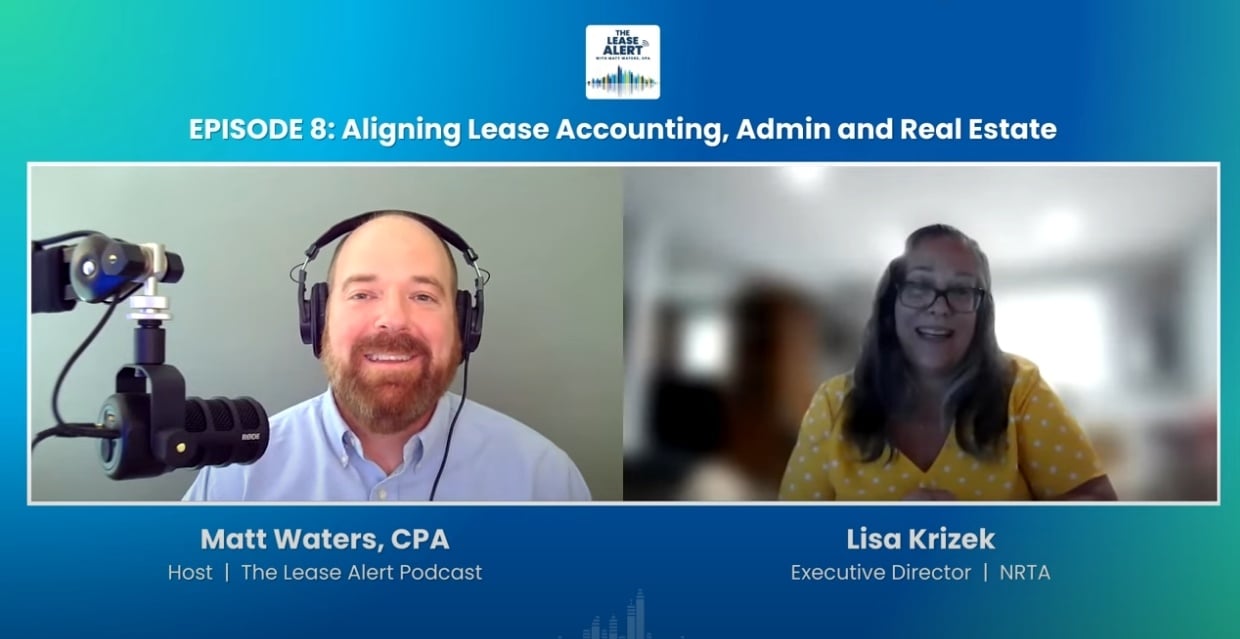
Aligning Lease Accounting, Administration and Real Estate
June 12, 2025
17
min read
A Perfect DNA Match: What the Visual Lease Acquisition Offers Customers

A Perfect DNA Match: What the Visual Lease Acquisition Offers Customers
January 16, 2025
3
min read
The Shrinking Lease Tech Landscape

The Shrinking Lease Tech Landscape
June 5, 2025
1
min read